Recipe Notebook from the Past

Laurium House
Vintage photo of unknown neighbors and what years later would become my home. The border is formed from wallpaper recovered within the kitchen walls!

Decades ago, my former husband and I bought a fixer-upper home that had been built around 1900 in a small town of Michigan’s Upper Peninsula. The house needed tons of work, and we basically lived upstairs while we began remodeling the first floor. When I say “we,” I mean mainly that he did the carpentry, and I cleaned up during and after the work was completed.

Since the kitchen was on the first floor and needed to be functional as soon as possible, that room was one of the priorities. While taking out the drawers in the kitchen for painting and new hardware, a small notebook was found jammed into the deep, dark depths of a cabinet. The booklet’s pages were somewhat discolored, and the brown, waxed cover bore the words “Memorandum Book.”

Within those lined pages, I discovered a delightful collection of handwritten recipes and helpful household hints. Some of them were even affixed with what must have been the names of the owner’s friends who had shared, as I recognized several of the last names of families living in that and the neighboring town. The penmanship style was similar to that of my mother or aunts who reliably sent letters to keep up on family news. I felt like I had struck gold.

Many of the recipes were desserts, although some were of casseroles or various types of vegetable and meat dishes. Two different versions of the Cornish meat pie regional specialty called the “pasty” were offered. Household hints ranged from a mixture that could be used to soften a hardened paintbrush to a home remedy for cough syrup.

When we said “goodbye” to that house some years later, the notebook found a new home in my paternal grandmother’s wooden recipe box and left with me.

I was recently encouraged to see that an online author acquaintance, Karen Musser Nortman, had put out a call for camping and/or Upper Peninsula recipes to accompany her current Frannie Shoemaker Campground Mystery, which is set in the area. I’m happy to say that the directions I submitted for pasties, “cry baby” cookies, and pasta sauce, all copied from that old notebook, now appear in the fiction book, Real Actors, Not People. What a fun way to recycle a few of those rescued recipes!

~Becky~

Inspired by a Dream

winter scene from Pixabay.jpg no attrib. req.It began as one of those dreams where the setting and events that were unfolding seemed simultaneously familiar yet unfamiliar. Instead of watching the vision like a movie, I was taking part and looking out through the woman’s own eyes toward three children gathered around a kitchen table. A snowy scene beyond the window was as well-known to me as the back of my hand.

The mood was both comforting and uncomfortable. I started to waken, but willed myself to remain in that place. Every inch of the room was recognizable to me, as were some of the occupants. As I held onto the dream, I knew without a word being uttered what had happened to these people and what their futures held.

Next, I just needed to wake up and write the story!

Several years after that writing, the resulting short fiction, “Slip of the Lip,” now appears in the 2018 edition of the UPPAA’s anthology, the U.P. Reader. That publication is an intriguing mix of fiction, non-fiction, prose, poetry, and photography, with its roots planted firmly in Michigan’s Upper Peninsula. I’m proud to have my writing once again included, along with so many talented contributors.

UP Reader 2nd Edition

What Draws Children to Certain Books?

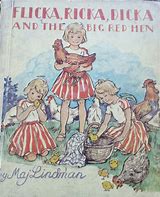
flicka, ricka, and dicka

During much of my childhood, the public library in our little town was housed in a small area adjacent to the fire station. Each time I arrived at the library with my family, I worried that the fire alarm might sound during our visit. However, I remember a span of several years when I would hurry immediately to a certain shelf where the books by Maj Lindman were lined up, and I soon forgot all my worries.

This author/illustrator from Sweden produced several series of picture books from the 1920s through the 1960s, including those featuring the triplet boys, “Snipp, Snapp, and Snurr,” and also the set of titles built around triplet girls, “Flicka, Ricka, and Dicka.” I’m happy to say that I’ve collected one from each series, which are library editions published in 1960. I see that Albert Whitman & Company has reissued many of these books (some with paper dolls, no less!); but, for me, those actually printed during my childhood mean so much more.

While looking my copies over, recently, I considered what it was that I had liked so much about them as a child. Possibly I can put some of my discoveries to use when fashioning my own books for young readers. I came up with the following factors:

  • Settings – The country’s name, “Sweden,” is stated in two out of the three books that I own in these series. Even when not mentioned outright, the setting depicted in the book feels very different from my neighborhood that was in the midst of a small town in Michigan.
  • Freedom  – Since many of the stories take place on farms or in other rural areas, the children often seem quite free to roam as they please and have many adventures that often involve animals, as well.
  • Names – Beyond the triplets’ monikers, many of the other characters have names that were also unfamiliar and interesting to me.
  • Family structure – Until I was somewhat older and a nearby neighbor gave birth to triplets, I had never known any such families. (Imagine my surprise when that trio was made up of one boy and two girls!).
  • Visually appealing – The lovely, full-page illustrations are so pleasing to the eyes, and many of the editions use a somewhat enlarged and easy-to-see font.
  • Simple stories that often involve extended families – This serves as a vehicle to get the children away from their homes and broadens the story options.
  • Surprise endings or subtle lessons to be learned – As I remember, the resolutions seemed satisfying to me as a child.

All that being said, it appears that some of the books are rather long and run over 1200 words. My mother preferred to read shorter books for story time, especially since I also had an even younger brother. My father usually chose to tell us stories that he made up, on the rare evenings when he arrived home early enough from work. My older sister was always eager to read to me, though, for which I am forever grateful.

snipp, snapp, snurr

Although the type of stories that appeals to today’s children has evolved, I’m sure, I believe that there are still some nuggets of basic childhood yearnings to be found in the pages from our youth. I’d love to hear about your favorite childhood books and what it was that drew you to them!


Meatless Mondays – Vegetable Paella: hold the gravel, but don’t skimp on the saffron!

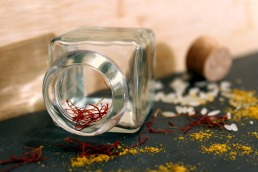
saffron
Saffron

A friend of mine recently expressed a preference for chicken paella over that made with seafood. You know exactly what I was thinking…and the following post is a tried and true recipe for vegetable paella!

I recall an entertaining chapter in Derek Lambert’s book, Spanish Lessons, in which the author’s wife carefully plans a dinner party while they are residing in Spain. Paella will be the main attraction, for which they rent a huge pan to cook the dish over an open fire. In a comedy of errors, two of their “friends” drop the pan and spill much of the ingredients on top of some gravel that had been brought to the yard during their remodel. Not wanting to admit their mistake, the men just scoop up what they can and pick out the obvious pieces of gravel. You can just imagine what happens at the table as the guests begin eating…

No, this recipe doesn’t contain gravel. What is paella, you might ask. It’s a traditional Spanish, or Valencian, dish that contains rice, often various meats or seafood, and a variety of legumes and vegetables. To me, the taste is dictated by the main spice: saffron. Sure, it’s expensive, but adds a deep, earthy flavor that is crucial to success.

Shopping List (amounts vary depending on your preferences)

Saffron
Paprika
Rosemary (if desired: sprig of fresh or dried)
Salt and pepper to taste
Olive oil
Vegetable stock (have at least 2 cups handy, but could also use part water)
Garlic (chopped)
Onion (diced)
Red, orange, and yellow bell peppers (long slices)
Tomatoes (diced: fresh or canned)
Green beans (cut: fresh)
Eggplant (hefty chunks)
Portabella mushrooms (large, cut into thick slices)
Chickpeas (canned or pre-cooked)
Rice (Arborio or other; I’ve used gluten-free with success)

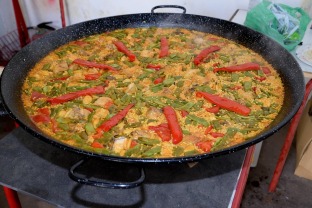
Soak a healthy pinch of saffron strands in a bit of hot water. In a large, low pan, stir fry the eggplant, onion, garlic, and peppers in olive oil to soften. Add rice (at least 1 cup), stock, tomatoes, saffron, rosemary (if wanted) and a few teaspoons of paprika. Bring to a boil and turn down to simmer, uncovered, for at least 10 minutes. Stir as needed, although some cooks like to allow the rice to cake a bit on the bottom of the pan, being careful not to let it burn.

Add the chickpeas, green beans, and mushrooms. Cook about 15 minutes longer, or until the rice is softened and the mixture is thick and bubbly. If you plan to imbibe, a good Spanish red would go nicely!

paella


Meatless Mondays: Vegetable Cassoulet


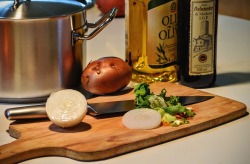
veggies pot and cutting board A commitment to “Meatless Monday” is easy for me, since I already eat that way most days. According to the website, this movement began in 2003 and is now active in 44 countries. Eating meat-free at least one day of the week is a positive for our health and good for the Earth.

Here’s one of my recipes that has evolved into a vegetable cassoulet, which is like a vegetable stew or casserole. Not sure if Peter Mayle would have approved of this version of a French classic, but I don’t even miss the meat.

As is typical for my recipes, there are many ingredient options from which you may choose your favorites. Make as little or as much as you want, so amounts will also vary according to your needs and plans.

In a kettle with high sides, brown diced/sliced onions, shallots and/or garlic in olive oil.

If you want your end result to be more like a casserole, your mixture can be emptied into a large casserole and will need less liquid (stock) than the more stew-like version.

Add desired amount of vegetable stock, along with your choices from among sliced leeks, mushrooms and fennel bulb. NOTE: Fennel has a hint of a licorice taste. You might also try a slug of ouzo or pastis in its place for the same flavor. Otherwise, a bit of white cooking wine is also a nice addition.

Add cooked/canned white beans (cannellini, great Northern, or even garbanzos).

Include your choices of the following, peeled and/or cut as required:

carrots
green beans
asparagus
Swiss chard
celery
colored peppers
eggplant
potatoes
turnips
parsley and/or thyme, fresh or dried

Adjust liquid as needed. Salt and pepper to taste. If baking, give this at least an hour at 350. If cooking on top of the stove, after your mixture reaches a boil, turn down the heat to a simmer. Cook until veggies are the desired texture.

Pair with your favorite bread and wine, if you wish.

kitchen window pixabay no attribution required

Happy B-day to Me & to Our Critique Group

flowers and computer

This is my birthday week, and I’m tempted, of course, to reflect on fond memories and post a few vintage pictures. I’m sure to do that in the future, but I’ve decided to look forward on this anniversary of my birth. Personal goals in the coming year are to form even firmer bonds with those individuals who matter to me AND to pursue further publication of my work with renewed structure and vigor.

I’m happy to say that I belong to several national and regional organizations that help to support writing and publication goals. I took advantage of local offerings and joined a writing critique group at the library soon after my move to Texas. Its members write in various genres and come from many different walks of life. We present our works for group feedback, share pertinent writers’ questions or information, and celebrate our successes.

Sometimes that meeting just once a month wasn’t quite enough to keep me motivated. About a year ago, I pursued the concept of a critique group for writers and illustrators of children’s literature, and “Write 4 Kids” was born! We also meet once a month at the library to present our works-in-progress, including books, stories, illustrations and query letters for potential publishers and agents.

In addition to providing feedback, we also share questions, information, disappointments and successes. Our numbers have grown steadily, and attendance continues to motivate and enlighten a group of local authors and illustrators. The input, friendship and support of both groups have been invaluable to me.

Another personal goal for the upcoming year is for my continued growth as an effective critique group member. Sometimes it’s too easy for one to offer a possible “fix” for a piece. The first order of business should be a focus on the positives and “what works.” I have to admit that my work as a freelance editor sometimes causes me to look for small surface errors instead of focusing on the “broad picture.”  I must remember to practice what I preach!

As always, soon after my birthday comes the first day of spring. I hope that your own season of renewal, wherever you’re located, will bring beauty, hope, and happiness.

Becky


Cataloguing a Life


sears 1957
1957


When I was a child, the thick Sears, Roebuck and Co. catalog was a staple in most homes. It contained sections for just about everything you could ever want to buy, it seemed, and offered another option for families who lived in more rural areas, like ours, with limited choices for shopping.

The large catalog came in handy for other things, too, like a “booster seat” for the tots who had outgrown their high chairs, but couldn’t quite reach the dinner table on their own. I remember a particular “snow day” from school when my sister and I had fun making “paper dolls” out of the previous season’s catalog. We carefully cut out the main figures and then found clothing on other pages that could be trimmed to fit. The joys of a simple childhood.

Years later, as a young mother with a child of my own, I saved “trading stamps,” which were given out by many of the grocery stores according to how much you spent. I pasted them into small booklets and watched the stack grow. Top Value was the main type I saved, and I spent considerable time perusing their mail order catalog to decide on the wonderful “premiums” that would be my goals. One of my older daughter’s first dolls, a sweet Kewpie in one-piece pajamas, came to live with us, thanks to Top Value stamps.

Penney's
1972


Around Thanksgiving, the J.C. Penney Christmas catalog was always a welcome sight in the mail. I spent hours poring over the pages to decide which gifts my daughters just couldn’t do without. This was also a great way to get ideas for grandmas and grandpas! Even though we had a few stores in our small town that carried toys, it seemed that the Penney’s catalog offered a much wider selection of brands, such as Playskool and Fisher Price. Playtime was better than ever with the likes of Happy Apple, Milk Wagon, and Chatter Phone. Our small house became a virtual village of Little People homes, schools, and farms. Pleasant memories.

Time marched on, and my children were nearly grown. By then, I’d finally earned my teacher certification and would have the opportunity to help other people’s youngsters learn and develop. I remember the excitement of securing my first teaching position and having the secretary hand me Lakeshore and ReallyGoodStuff catalogs to order materials for my new classroom, since we were located hours away from the nearest teacher supply store. It seemed too good to be true after all those years of study. I did, in fact, order some “really good stuff.”

Over the years, it seemed that I always ended up back in a remote area with very limited shopping. Fall typically brought the new catalogs from L.L. Bean and Lands’ End. Buying that new winter jacket at the END of the season when it was on sale was a much better plan, of course, but it was still great fun to look. The most welcomed catalogs in our part of Upper Michigan were the early spring arrivals from plant and flower companies like Gurney’s, Burpee, and Michigan Bulb. Those indicated that we WOULD, indeed, make it through another winter! I spent a great deal of time sketching ideas for our flower beds based on choices made for the local growing zone. Sometimes we bought through mail order, and other times we visited our local nursery. Either way, having those catalogs for handy visuals and information was priceless.

Life has a strange way of leading where we don’t expect. A few years ago, I found myself living on my own in a more populated area with every type of store you can imagine in close range. One rainy afternoon I was retrieving my umbrella from the floor on the passenger side of the car and noticed some papers under the seat. Pulling them out, I saw a grocery store flyer from my previous life, along with a Plow & Hearth catalog sporting my former husband’s name. I then remembered leaving for what ended up being our last road trip together. We had stopped for the mail on our way out, and I just shoved it under the seat to be forgotten. My only “hearth” nowadays is artificial, and I have no garden to dig in, much less “plow.” Quite the reminder about the changes in the fabric of my days.

The holidays have now passed for another year. Several weeks ago, I was surprised when I visited the bank of mailboxes in my apartment building lobby to find a Burpee spring catalog mixed in with the rest of my mail. It was actually addressed to me and not just to “current resident.” They found me! Guess the nice folks at Burpee don’t know, or care, that I currently have no need for plants and seeds, or any of the related supplies. I’m hanging onto it, though, and won’t admit just how many times I’ve peeked at its pages. Who knows what the future may bring.


What Makes an Effective Writing Critique Group Member?


I’m very thankful for the two local critique groups that I attend and always leave feeling renewed and inspired. One is a well-established combination of writers from all different genres. I lead the second one, which is a newer compilation of writers and illustrators for children’s literature. Each group meets in person monthly, and occasional digital critique swaps are also requested and take place in between our gatherings. Since I’ve been taking part and observing for some time, now, several aspects for effectiveness have jumped out at me and motivated the following suggestions:

*When commenting in writing or orally, try to start out with a positive, follow with suggestions, and possibly end with another positive, as time allows (“sandwich” approach)

*Point out specific sections of the pieces for examples whenever possible, instead of speaking in generalities

*Keep in mind “nerves” and any misgivings you may have had when you first joined the group, upon greeting new attendees

*When receiving feedback, try to listen to a member’s full comments before responding with an explanation of your thinking or reasoning (this can be difficult to do!)

*Share your successes AND your disappointments, which can help to form connections between members

*Offer critiques on a continuing basis, even during those times when your own work is not being shared

Am I ALWAYS successful in remembering to do each of these things? I admit that I’m not, but these are my goals, since I can see how these strategies work so well when implemented. Feel free to add comments with ideas you’ve found to be especially helpful in your own groups!

Windows Open!


In the Midwest, the invigorating change of the seasons was often marked by melting or returning snows, reappearance or disappearance of greenery and flowers, along with changes in the patterns of wildlife visiting the yard. In Texas, transformations related to precipitation, flora and fauna are much more subtle to the non-scientific eye. For me, the main difference is whether or not I can comfortably open my windows. With a twenty degree drop in the temperature since yesterday, today is one of those marvelous days to open the windows wide.

This may sound like such a simple and even mundane act, but it’s an activity that many Texans, who are accustomed to such high temperatures, often seem to overlook. Indeed, many of the local apartment buildings, including my own, do not include window screens. That presents a choice to be made: leave the windows closed at all times, open them and risk unwanted flying visitors, or add some sort of protection. During my first autumn here, I remembered a type of free-standing window screen from childhood that opened like an accordion to fit various sized apertures. Where was my handy neighborhood hardware store when I needed it? Impatience had a hold on me, and ordering through the internet would have taken too long. Surprisingly, I found several at Wal-Mart, after sifting through a pile where many seemed to be damaged. I was on my way to opening my windows.

The next issue was how to make sure the new screens didn’t fall out onto those passing below, since their fit into the window opening isn’t exactly fool-proof. I found articles posted by individuals on the internet about just this topic, with suggestions that involved carpentry (not for me), Velcro, and removable adhesive putty. I went with a white version of the latter, since I was familiar with its easy and mess-free use from mounting things on my classroom walls as a former teacher. Just one little wad on each wooden end piece, while leaving my window closed a little farther than the height of the screens, and I secured them in place. Depending on the configuration of your windows, this may not be an air-tight fit, and you might still need to be on the lookout for small insects. I would certainly avoid these types of screens if I had a curious pet or young child.

Today’s cool breezes feel glorious. I can hear light traffic noises, occasional bird calls and distant voices. When opening the windows, we also put ourselves out there and share somewhat personal snippets of our lives, such as escaping cooking smells, voices, and the sounds of our favorite music, television program or current audio book.

The act of writing is a bit like opening windows. In sharing memoir and personal essays, we reveal our beliefs, feelings and memories to the world. Even in fiction, we raise the sashes that protect our personal experiences on which plots and characters are often based. We take a chance on rejection, disregard, or disagreement when opening ourselves up to the public, whether we share through a critique group, blog, website, self-publication, or if we publish in a traditional format. The potential rewards are many. Other writers and the public at large often embrace our written ideas and may offer helpful feedback, as well.

As writers, we should try to avoid being fearful of the results, take chances, and open our windows to the world beyond.

Collecting Memories

As a typical kid growing up in the 1950s, I collected the usual sorts of things, like pretty stones, smooth driftwood, multi-colored marbles, favorite books and treasured dolls. I wasn’t really much of a “pack rat,” though, and by the time I moved away from home the only parts of those collections that remained were a set of Trixie Belden mysteries and a few Barbie dolls.

As the years went by, the basis for my taste in collectible books remained much the same: heavy on the mystery and brimming with nostalgia. Most of the books I’ve sought out or have purchased after being pleasantly surprised by their appearance hold a connection to the past. When my life hit a U-turn a few years ago, and I was faced with downsizing from a house to a small apartment, my treasured book collection took a necessary but serious hit.

map backWhat remains is a selection of childhood chapter books, Golden Books related to memories but collected as an adult, author-signed novels, and a few vintage tomes that are too wonderful (and smelly) to ever discard. The largest set in the lot is my Dell Mystery Map Backs. As a child, I loved books that included illustrations of maps. Imagine my delight as an adult to discover these wonderfully “campy” mysteries with the great front cover art (although sometimes a bit lurid) and maps on the backs to match the stories. When moving day arrived, the only map backs I had parted with were a few duplicates.

Luckily my apartment has ample kitchen cupboard space, since my other main collecting activity has turned toward dinnerware, including Luray Pastels, Fiestaware, and Blue Willow. I really can’t bear to part with most of the pieces, since they were handed down to me from my grandmothers, mother, and several aunts.
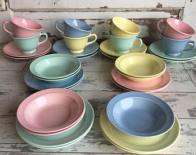
Luray

The delicate scrollwork and pastel tones of the pink, blue, yellow and green Luray originated in West Virginia, near the Luray Caverns, from 1938-1961 and were made by Taylor, Smith, and Taylor Company. The set I now have once belonged to my mother’s older sister, and they often make me think of our homes in Michigan. The only piece that I use daily is the yellow salt shaker, and my favorite example that’s on display is the blue teapot. For a period of time, light gray additions were also produced, but never caught on in popularity and were then dropped. Pieces in that color are now highly collectible, and I’m happy to say that I hung on to the gray Luray platter that I bought “for a song” some years back.

fiestaware multiAlthough Fiestaware, which is produced by the Homer Laughlin China Company, also of West Virginia, was introduced in 1936, my pieces are not in the realm of vintage, unless that includes a set purchased through the J.C. Penney catalog in the 1990s. I had admired these colorful, sturdy dishes at the homes of friends as a child, and when I had the chance to purchase dinnerware of my own they seemed like the logical choice. Fiestaware is available in a wide range of colors, and my set is composed of deep pastels, including turquoise.  Over time, I’ve also added select pieces in red to be used as serving dishes. I often make use of the small plates and bowls while “cooking for one” and display the reds in my Hoosier-type cabinet in the fall and around the holidays.
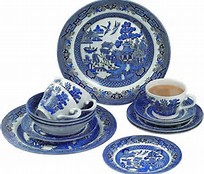
Blue WillowWillow is an elaborate design that has been used on kitchen ware for hundreds of years and probably got its start as Spode transferware. Various colors have been used, and mine is all of the popular blue variety. The lovely scenes that are depicted include detailed buildings, gardens, bridges, and figures, which found their inspiration in wares that originated in China. Various companies appear to use these patterns, and my wide assortment came from both grandmothers, my father’s oldest sister and my mother. They all remembered that I had expressed an interest in those dishes as a child, and that fact makes me treasure them even more. I sometimes use the small bowls or plates and regularly display my favorites. The patterns vary and several that really catch my eye are the ones made in Holland that include camels in their designs.

No matter which type of collecting, my favorite objects will always be those that invoke a memory of the past or the air of childhood. If you were to ask my grandchildren about what I collect, they would probably say “roosters,” and I admit that quite a few of them in various incarnations do reside in my kitchen. Although only a few of them are connected to childhood, like my mother’s egg cups, I’ve had most of them for years. If the roosters could talk, they would tell stories about the history of my former life and marriage, including observations on all of the interesting kitchen renovations where they have “lived.”

As far as the Trixie Belden books and Barbie dolls that I took away from my childhood home as a newly minted adult, I still have them. The pages are somewhat discolored and brittle. The words and pictures still carry a type of intrigue and predictable comfort that I hope to instill in my own writing for children. Barbie and Ken make a curious couple, with his right arm missing and her bouffant hair somewhat worn off from the back of her head. They’re still smiling, though, after all these years.Barbie and Ken