Inspired by a Dream

winter scene from Pixabay.jpg no attrib. req.It began as one of those dreams where the setting and events that were unfolding seemed simultaneously familiar yet unfamiliar. Instead of watching the vision like a movie, I was taking part and looking out through the woman’s own eyes toward three children gathered around a kitchen table. A snowy scene beyond the window was as well-known to me as the back of my hand.

The mood was both comforting and uncomfortable. I started to waken, but willed myself to remain in that place. Every inch of the room was recognizable to me, as were some of the occupants. As I held onto the dream, I knew without a word being uttered what had happened to these people and what their futures held.

Next, I just needed to wake up and write the story!

Several years after that writing, the resulting short fiction, “Slip of the Lip,” now appears in the 2018 edition of the UPPAA’s anthology, the U.P. Reader. That publication is an intriguing mix of fiction, non-fiction, prose, poetry, and photography, with its roots planted firmly in Michigan’s Upper Peninsula. I’m proud to have my writing once again included, along with so many talented contributors.

UP Reader 2nd Edition

Memory Won’t Fail if You Eat Your Kale!


The weekend has just begun, and I’m already thinking about Meatless Monday! Temperatures here in Texas have climbed way too high for the beginning of June, so I definitely won’t want to use the oven. Simmering a covered pot on top of the stove seems like a good option.

Did you eat kale as a kid? I never did, even though my father was a prolific vegetable gardener. Maybe it doesn’t grow well in Michigan? Not sure. After buying a bag of the green stuff a while back, I then had to figure out what to do with it. I settled on a vegetable gumbo that worked with other ingredients I had on hand, and it turned out quite tasty! My kale was the curly type, but I’m sure that tender baby kale would also work well and cook even more quickly. The texture of the end result would just be a bit different.

If you don’t know much about kale or haven’t tried it lately, you might want to consider some important health implications. This NPR  article (also available on the site as a podcast) tells us that people who eat leafy green vegetables every day (like spinach, kale and collard greens) appear to have slower cognitive decline rates. That’s good news, and now we just need to come up with more interesting ways to eat them! Try the following recipe, and I don’t think you’ll be disappointed. Make it as spicy or mild as you like:

INGREDIENTS (amounts are up to the cook:)

  • Kale (chopped)
  • Red bell peppers and/or tomatoes (diced)
  • Okra (sliced)
  • Celery, onions and/or garlic (chopped/diced)
  • Bean choices – black, red, or even garbanzo
  • Corn, if desired
  • Vegetable bouillon cube or stock
  • Spice choices – pepper (black and/or cayenne), celery salt, paprika, thyme, oregano
  • Water and/or stock to cover veggies
  • Rice (optional)

Cook on high until the mixture starts to bubble, and then turn to low and simmer until the kale is tender. Add more water or stock during cooking if needed.

Serve over cooked rice…or not!


If you’re cooking for kids and haven’t yet convinced them about the wonders of kale, you might also try making roasted kale chips as a fun family activity. There are many recipes to choose from on the Internet!

How Mrs. Wishy-Washy Saved the Day: a former teacher’s reflections

Mrs. Wishy-Washy

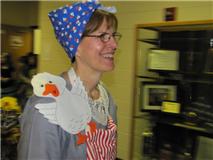
Becky as Mrs. Wishy-Washy
Becky as Mrs. Wishy-Washy on Halloween at her last school!


When I moved back to my home state of Michigan about fifteen years ago, I jumped at the chance to teach kindergarten at a Pre-K/K early learning center. That public school was in the Upper Peninsula and part of the state’s most northern K-12 school district. My recent teaching experiences were with upper elementary students, and it had been years since I worked in a preschool or completed a short stint in kindergarten during my student teaching. To say that I was nervous is an understatement!

Imagine my excitement when I discovered a dark cupboard full of colorful ‘big books’ the first day I visited my new classroom.  Many of the titles were written by the prolific New Zealand author, Joy Cowley, whose books I hadn’t previously encountered.  During that school year, I learned to love her books just as much as my students adored them!

All of Ms. Cowley’s books are great, but Mrs. Wishy-Washy was the most popular character, hands down. Here’s some background about her:

  • Who is Mrs. Wishy-Washy?  One of Joy Cowley’s most-loved characters
  • What is very important to her?  Cleanliness!
  • Where do she and Mr. Wishy-Washy live?  In a rural area in the state of Washington
  • When does she get grouchy?  When something gets in the way of her washing
  • Why do her animals sometimes look sad?  They are tired of being washed!

Besides tales of keeping other characters and her surroundings clean, other antics involve a farm fair, birthdays, gardening, baking, and appearing on TV. The students loved chiming in during ‘shared reading’ time and then reading on their own with the small-book versions of the matching titles.


Ms. Cowley’s books are very conducive to a wide variety of literacy lessons:  beginning and ending sounds, blending, rhyming, story elements, sequencing, building words, spelling patterns, sight words…the list goes on and on!  Beyond that, many of them also lend themselves easily to tie-ins with other areas of the curriculum, such as science, math and social studies.

It’s no wonder that I again sought out Mrs. Wishy-Washy and friends some years later, when I found myself teaching young learners in another U.P. location. In relief, I found the school library housed many of her big books for the teachers to share, and that the smaller versions were already on the shelf in my classroom.

For those of you who write for kids, this author has a wonderful book titled Writing from the Heart that I’ve found to be a great resource for my own writing. If you’re teaching or have young children and haven’t met Mrs. Wishy-Washy and Joy Cowley’s other books, you may want to check them out. I’d love to hear about your favorite picture book characters OR about your ‘go-to’ resource books for writers!

barn-no attrib. required

Love Your Library? Help Safeguard Funding for 2019!


WHY?

According to the ALA (American Library Association),

“…despite the additional federal dollars for domestic programs in 2018, the 2019 budget proposed later in February 2018 by the White House again eliminates funding for libraries across the country through LSTA (Library Services and Technology Act) and IAL (Innovative Approaches to Literacy), and the fight to reinstate and retain this primary source of federal support for libraries, as well as other programs affecting libraries, will continue into the next year.

WHAT?

On May 7-8, nearly 500 library advocates are heading to Washington, D.C. to meet with their Senators and Representatives. You can help boost the signal! There are three “asks” for National Library Legislative Day (NLLD) this year:

  • House & Senate: Reauthorize the Museum and Library Services Act (S. 2271)
  • House & Senate: Fully Fund LSTA and IAL for FY 2019
  • House & Senate: Visit a library, see broadband access in action

You have plenty of ways to participate in NLLD from home! Check out the toolkit, with suggestions for spreading the word through social media and writing your elected officials an email inviting them to tour your library.

WHO?

Check the LSTA and IAL letter trackers to see if your Senators and Representatives signed this year! If not, please consider contacting them! You can find your elected officials here.

*****

I love my library and depend on it in so many ways beyond finding books and other media! It’s also an important social hub in the city square that offers programs like book clubs and writing critique groups, along with available space for tutoring. What do you appreciate most about your library?


Source:

“National Library Legislative Day”, American Library Association, March 27, 2018.http://www.ala.org/advocacy/advleg/nlld (Accessed May 3, 2018)Document ID: 855aa32e-90b8-5164-3dcb-487bdac4a42d

Celebrate Independent Bookstores!

indie books

On the last Saturday in April (and every day!) celebrate and support those wonderful, independent bookstores. My mind floods with memories of shops I have known and loved, with many of them now being too many miles away for a quick visit. What factors are most important to you in a bookstore? I certainly have several thoughts on the matter, but also wondered what some of you look for in your “tome travels.” Leave a quick comment about what you think makes a great place to shop, or about your favorite “finds,” on your way out the door to load up on books!

TIP OF THE HAT: Among my all-time favorites is Snowbound Books in Marquette Michigan…

snowbound

What Draws Children to Certain Books?

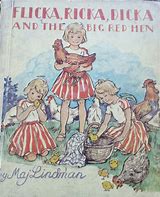
flicka, ricka, and dicka

During much of my childhood, the public library in our little town was housed in a small area adjacent to the fire station. Each time I arrived at the library with my family, I worried that the fire alarm might sound during our visit. However, I remember a span of several years when I would hurry immediately to a certain shelf where the books by Maj Lindman were lined up, and I soon forgot all my worries.

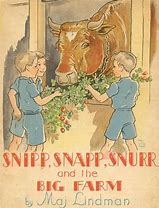
This author/illustrator from Sweden produced several series of picture books from the 1920s through the 1960s, including those featuring the triplet boys, “Snipp, Snapp, and Snurr,” and also the set of titles built around triplet girls, “Flicka, Ricka, and Dicka.” I’m happy to say that I’ve collected one from each series, which are library editions published in 1960. I see that Albert Whitman & Company has reissued many of these books (some with paper dolls, no less!); but, for me, those actually printed during my childhood mean so much more.

While looking my copies over, recently, I considered what it was that I had liked so much about them as a child. Possibly I can put some of my discoveries to use when fashioning my own books for young readers. I came up with the following factors:

  • Settings – The country’s name, “Sweden,” is stated in two out of the three books that I own in these series. Even when not mentioned outright, the setting depicted in the book feels very different from my neighborhood that was in the midst of a small town in Michigan.
  • Freedom  – Since many of the stories take place on farms or in other rural areas, the children often seem quite free to roam as they please and have many adventures that often involve animals, as well.
  • Names – Beyond the triplets’ monikers, many of the other characters have names that were also unfamiliar and interesting to me.
  • Family structure – Until I was somewhat older and a nearby neighbor gave birth to triplets, I had never known any such families. (Imagine my surprise when that trio was made up of one boy and two girls!).
  • Visually appealing – The lovely, full-page illustrations are so pleasing to the eyes, and many of the editions use a somewhat enlarged and easy-to-see font.
  • Simple stories that often involve extended families – This serves as a vehicle to get the children away from their homes and broadens the story options.
  • Surprise endings or subtle lessons to be learned – As I remember, the resolutions seemed satisfying to me as a child.

All that being said, it appears that some of the books are rather long and run over 1200 words. My mother preferred to read shorter books for story time, especially since I also had an even younger brother. My father usually chose to tell us stories that he made up, on the rare evenings when he arrived home early enough from work. My older sister was always eager to read to me, though, for which I am forever grateful.

snipp, snapp, snurr

Although the type of stories that appeals to today’s children has evolved, I’m sure, I believe that there are still some nuggets of basic childhood yearnings to be found in the pages from our youth. I’d love to hear about your favorite childhood books and what it was that drew you to them!


Meatless Mondays – Vegetable Paella: hold the gravel, but don’t skimp on the saffron!

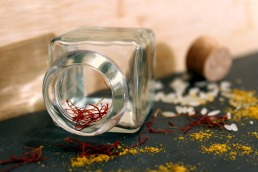
saffron
Saffron

A friend of mine recently expressed a preference for chicken paella over that made with seafood. You know exactly what I was thinking…and the following post is a tried and true recipe for vegetable paella!

I recall an entertaining chapter in Derek Lambert’s book, Spanish Lessons, in which the author’s wife carefully plans a dinner party while they are residing in Spain. Paella will be the main attraction, for which they rent a huge pan to cook the dish over an open fire. In a comedy of errors, two of their “friends” drop the pan and spill much of the ingredients on top of some gravel that had been brought to the yard during their remodel. Not wanting to admit their mistake, the men just scoop up what they can and pick out the obvious pieces of gravel. You can just imagine what happens at the table as the guests begin eating…

No, this recipe doesn’t contain gravel. What is paella, you might ask. It’s a traditional Spanish, or Valencian, dish that contains rice, often various meats or seafood, and a variety of legumes and vegetables. To me, the taste is dictated by the main spice: saffron. Sure, it’s expensive, but adds a deep, earthy flavor that is crucial to success.

Shopping List (amounts vary depending on your preferences)

Saffron
Paprika
Rosemary (if desired: sprig of fresh or dried)
Salt and pepper to taste
Olive oil
Vegetable stock (have at least 2 cups handy, but could also use part water)
Garlic (chopped)
Onion (diced)
Red, orange, and yellow bell peppers (long slices)
Tomatoes (diced: fresh or canned)
Green beans (cut: fresh)
Eggplant (hefty chunks)
Portabella mushrooms (large, cut into thick slices)
Chickpeas (canned or pre-cooked)
Rice (Arborio or other; I’ve used gluten-free with success)

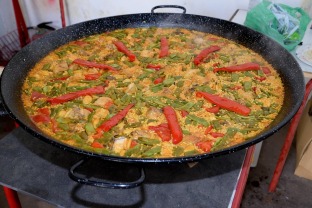
Soak a healthy pinch of saffron strands in a bit of hot water. In a large, low pan, stir fry the eggplant, onion, garlic, and peppers in olive oil to soften. Add rice (at least 1 cup), stock, tomatoes, saffron, rosemary (if wanted) and a few teaspoons of paprika. Bring to a boil and turn down to simmer, uncovered, for at least 10 minutes. Stir as needed, although some cooks like to allow the rice to cake a bit on the bottom of the pan, being careful not to let it burn.

Add the chickpeas, green beans, and mushrooms. Cook about 15 minutes longer, or until the rice is softened and the mixture is thick and bubbly. If you plan to imbibe, a good Spanish red would go nicely!

paella


Meatless Mondays: Vegetable Cassoulet


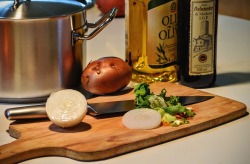
veggies pot and cutting board A commitment to “Meatless Monday” is easy for me, since I already eat that way most days. According to the website, this movement began in 2003 and is now active in 44 countries. Eating meat-free at least one day of the week is a positive for our health and good for the Earth.

Here’s one of my recipes that has evolved into a vegetable cassoulet, which is like a vegetable stew or casserole. Not sure if Peter Mayle would have approved of this version of a French classic, but I don’t even miss the meat.

As is typical for my recipes, there are many ingredient options from which you may choose your favorites. Make as little or as much as you want, so amounts will also vary according to your needs and plans.

In a kettle with high sides, brown diced/sliced onions, shallots and/or garlic in olive oil.

If you want your end result to be more like a casserole, your mixture can be emptied into a large casserole and will need less liquid (stock) than the more stew-like version.

Add desired amount of vegetable stock, along with your choices from among sliced leeks, mushrooms and fennel bulb. NOTE: Fennel has a hint of a licorice taste. You might also try a slug of ouzo or pastis in its place for the same flavor. Otherwise, a bit of white cooking wine is also a nice addition.

Add cooked/canned white beans (cannellini, great Northern, or even garbanzos).

Include your choices of the following, peeled and/or cut as required:

carrots
green beans
asparagus
Swiss chard
celery
colored peppers
eggplant
potatoes
turnips
parsley and/or thyme, fresh or dried

Adjust liquid as needed. Salt and pepper to taste. If baking, give this at least an hour at 350. If cooking on top of the stove, after your mixture reaches a boil, turn down the heat to a simmer. Cook until veggies are the desired texture.

Pair with your favorite bread and wine, if you wish.

kitchen window pixabay no attribution required

Happy B-day to Me & to Our Critique Group

flowers and computer

This is my birthday week, and I’m tempted, of course, to reflect on fond memories and post a few vintage pictures. I’m sure to do that in the future, but I’ve decided to look forward on this anniversary of my birth. Personal goals in the coming year are to form even firmer bonds with those individuals who matter to me AND to pursue further publication of my work with renewed structure and vigor.

I’m happy to say that I belong to several national and regional organizations that help to support writing and publication goals. I took advantage of local offerings and joined a writing critique group at the library soon after my move to Texas. Its members write in various genres and come from many different walks of life. We present our works for group feedback, share pertinent writers’ questions or information, and celebrate our successes.

Sometimes that meeting just once a month wasn’t quite enough to keep me motivated. About a year ago, I pursued the concept of a critique group for writers and illustrators of children’s literature, and “Write 4 Kids” was born! We also meet once a month at the library to present our works-in-progress, including books, stories, illustrations and query letters for potential publishers and agents.

In addition to providing feedback, we also share questions, information, disappointments and successes. Our numbers have grown steadily, and attendance continues to motivate and enlighten a group of local authors and illustrators. The input, friendship and support of both groups have been invaluable to me.

Another personal goal for the upcoming year is for my continued growth as an effective critique group member. Sometimes it’s too easy for one to offer a possible “fix” for a piece. The first order of business should be a focus on the positives and “what works.” I have to admit that my work as a freelance editor sometimes causes me to look for small surface errors instead of focusing on the “broad picture.”  I must remember to practice what I preach!

As always, soon after my birthday comes the first day of spring. I hope that your own season of renewal, wherever you’re located, will bring beauty, hope, and happiness.

Becky


Peter Mayle: A Life in Provence

provence


I was recently saddened to learn that one of my favorite authors, Peter Mayle, has died. The first book I ever bought by Mr. Mayle was Where Did I Come From?, which was purchased over 40 years ago in anticipation of telling my children about the facts of life. Decades later, when I was introduced to his travel memoir, A Year in Provence, I had no idea that this was even the same author. During the intervening years, he had published several other books for children and worked in advertising. He and his wife then took the plunge and gave up their lives in England to relocate in France.

The book was serialized for the BBC, and I came across the videos (yes, videos) at the library, while living in Michigan’s Upper Peninsula. Filmed in Provence, the story was mesmerizing. I could relate in some small way to what he and his wife faced, having myself moved to various parts of the U.S. and adjusted to unfamiliar cultures. Those changes never required learning another language, however!

The views and vistas portrayed in the films were like nothing I have ever had access to on a daily basis, even in the most scenic areas of Michigan’s Great Lakes, North Carolina’s shores, Virginia’s mountains, or Texas Hill Country. Beyond the story’s familiar theme of moving to a different type of world, one can also find the more elusive theme of life never being too far along to try something new. This is such an important belief, and I think it resonates for many of us.

The mini-series wasn’t a critical success, evidently, although John Thaw’s portrayal of Peter Mayle was excellent. I loved it, though, and have watched it more times than I care to admit. Thanks to finding the series on the dusty bottom shelf at the library, I was led to the body of works by this wonderful author. I still remember the pleasure of cuddling up by the fireplace with a snowstorm raging outdoors and experiencing the warmth of the French countryside and the scent of lavender.

Peter Mayle wrote several successful sequels to that book, which are presented a bit more like collections of short stories. All the books contain humor, food, wine, weather, friendship, local culture and beautiful locales. How else would I ever have bumped into truffles (the mushroom-like fungi, not the chocolates), boules, the mistral, or pastis? This author wrote other enjoyable non-fiction, in addition, usually centered on various interesting aspects of French culture. To my delight, there were also his novels to devour, which portray many of the same characteristics as his memoirs, along with crimes solved, business deals conducted and wine produced. There’s some romance to be found, as well. A lovely movie with Russell Crowe and Marion Cotillard is based on Mayle’s book, A Good Year.

With regret, I have to admit that I didn’t bring the entire collection of Mr. Mayle’s books with me when I moved. I did keep A Year in Provence, of course, and I especially value my ARC (advance reading copy/uncorrected proof) of A Good Year, with the plain blue cover. This format seems just that much closer to the author’s keyboard, somehow.

Try his first book, and if you love it, you’ll have a treasure trove to explore beyond that one. I’m extremely sorry that he’s gone, but surely this author knew that his writing had affected the lives of others, as evidenced by the book sales and fans, increased tourism to Provence, and readers who sought him out when visiting the region.

Merci, Monsieur Mayle!