Sweater Weather

Rubble, Reign, Hazel, and Remi

The weather has finally turned chilly here in North Texas. But it wasn’t that many weeks (days?) ago that the temps were still quite toasty. Here’s a little story I wrote about one of those days.

All Safe Inside

The air around us is suffocatingly hot, close, and still. A weak light wobbles in my hand. Smells of doggie breath, spit, and sweat assail my nose. Three of my four charges take turns panting and barking. The fourth snarls and tries to rip apart the small dog bed on the floor. Beyond our confined space, all noises are muffled and faint. I feel my heart beating in my sore teeth. And then a text lands on my phone.

EARLIER THAT DAY…

“Go potty!” I said, opening the door to let my four fur grandbabies into the backyard. Hazel, the senior boxer, immediately lay down in a patch of sun. Rubble, Remi, and Reign‒the three miniature pinschers‒sprinted away to the far corners of the fenced area.

After watering thirsty plants, I sat on a lawn chair, thankful for the beautiful day. The sky was deep blue, with a few cottony white tufts. A gentle breeze cooled my skin. I heard a lawnmower next door, and soon, the smell of newly mown grass wafted over the fence. One of the min pins zoomed past. Dog sitting for that pack kept me on my toes and made the week fly by.

“Go potty,” I reminded the dogs, noting they were more interested in napping or chasing toads, butterflies, and bunnies. Unexpectedly, I heard faint chirps and looked above at the improbably small barn swallow nest. The mud structure was secured under a corner of the back porch overhang. An adult bird swooped in for feeding time. Popping above the edge of the nest were three tiny bird heads, their beaks opened and waiting. Quite a show.

With closed eyes, I listened to the relaxing sounds of the pool’s fountain. I hadn’t brought my suit but considered coming back out later to cool my feet in the water while I read. My smile soon turned into a frown when I felt a slight twinge in my teeth. A recent visit to the dentist had provided no resolution, except for another appointment scheduled for several weeks later.

Just then, I got a call from my vacationing daughter. She asked about the doggies and mentioned seeing that severe weather was expected in the area that night. I know Texas storms can be extreme. I reassured her that I wasn’t worried and would remain weather-aware. I urged the dogs back indoors, promising treats for those who obeyed. Rubble was often the holdout, spending extra time moseying around the perimeter of the yard for anything he missed on his initial patrol of the area.

The rest of the day got away from me, between the dogs and the editing work that always accompanied me on the laptop. Before I knew it, the clock said it was past time for the dogs’ dinner, followed by their last potty break. When I opened the door, I realized the weather had turned. The temperature had dropped, and a strong wind blew. In the sky, angry dark clouds raced across the face of the moon. The baby birds were quiet for the night, and I was happy for the protection they had within their nest. I encouraged the puppy potty party of four to go out and do their business quickly.

“Inside!” I told the dogs as soon as they’d gone potty, promising them treats if they quickly followed my command.

Back in the house, I remembered the blue betta swimming lazily in its fishbowl and sprinkled a few food pellets into the water. I closed the blinds and got ready for bed. Rain spattered the windows. Before long, Hazel lounged on her large dog bed, and the three min pins were up on the bed with me and my book. Suddenly, the shrill blare of weather warning sirens sounded!

Like in my nearby town, that alert meant a tornado or large hail with high, destructive winds. I would take no chances and felt a strong responsibility for my daughter’s dogs. Grabbing my phone, flashlight, and a handful of dog treats, “Come! Treat!” I announced. We headed for the storm shelter, solidly set in the hot garage. Of course, Rubble, being Rubble, needed to make several passes inside the garage before he joined the others in the small shelter. I turned on the flashlight, closed the door, and sat on a low stool. That’s when all heck broke loose. No, not weatherwise. In fact, I could barely hear the wind and the faint pelting of hail. The problem was with the dogs!

As the confused canines tried to make sense of their surroundings, I already wondered how long we’d need to stay in that sweaty torture chamber. Remi and Reign nipped at each other, trying to run around in the small space. Hazel barked loudly, sending her odiferous breath directly into my face. And a snarling Rubble took over the small pet bed on the floor‒not to lie down but to try and rip it apart with his teeth. Time stood still.

RIGHT NOW…

My phone buzzes with a timely text from my daughter. “Just checked the radar for your area! Are you okay?” I assure her we are ALL safe in the storm shelter (except the fish…oops!). “There’s a fan in there,” she adds.

I shine my flashlight into the dark corners, and there it is, right next to me. My savior. I turn on the fan and pick up Rubble. He sits on my lap, whiskers facing into the surprisingly cool breeze. Rubble is suddenly quiet and content. The other three follow his lead, lie down, and go silent. I check my phone for a weather update. My toothache recedes from a steady throb to an occasional twinge.

Tomorrow, the sun will return, and I will start my second day of dog sitting. I can do this!
Literary Rescue

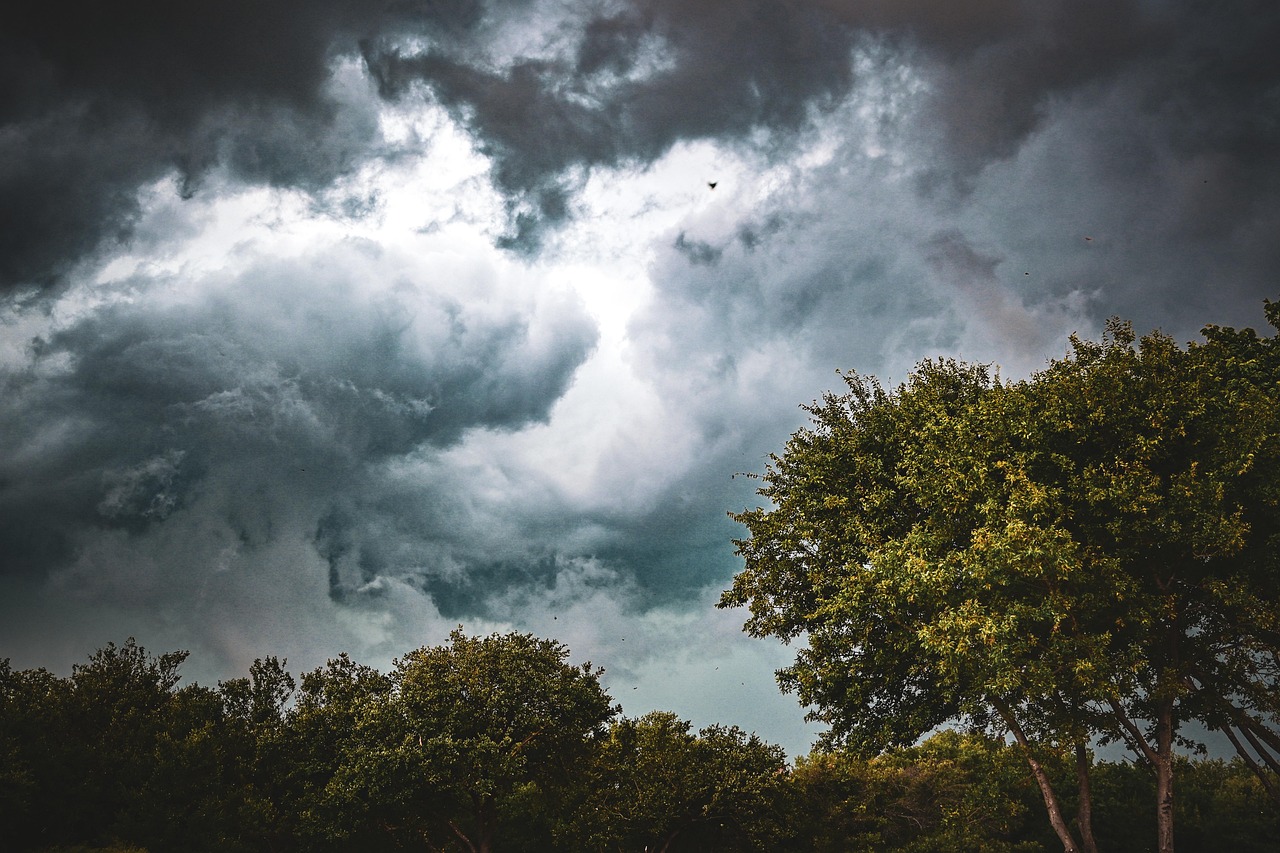
Blue Norther in Garland Texas – Pixabay

In the past, I’ve had the privilege of rescuing several animals to adopt and save them from an uncertain future. I’ve also rescued plants heading for the compost pile, nurturing them back to health. But a type of mission I’ve accepted that is not as widely appreciated is the literary rescue!

You might ask, “What’s a literary rescue?” First, let’s look at what it is NOT.

As a teenager, I had my first sleepover with a friend I had known since elementary school. We had fun paddling a rowboat around the shallow inland lake across from her house. However, after dinner, we were told that my friend had to put in her hour of daily piano practice. What to do? I wouldn’t attempt the boat alone. And they lived on a country road, so I wouldn’t go walking around. I didn’t want to sit in the living room and stare at her parents (or have them stare at me). My only option seemed to be waiting in her sparsely appointed room. Then what? An hour with nothing to do can seem like an eternity to a teen.

Luckily, I discovered a small shelf filled with books in the corner of her room. These were old books, mostly without dust jackets, to provide clues about their contents. I grabbed one named Claudia because it was a girl’s name and started reading. The story was about a young, recently married woman who was not yet far beyond her teenage years. I was captivated. The sounds of piano music in the background faded away.

When my friend finally returned, I showed her what I’d been reading. She informed me that “all those old books” used to belong to her mother, and the girl didn’t like most of them. I’d started reading one and asked if I could borrow it and finish it later at home. She agreed and wrote her name inside. I thoroughly enjoyed the book. I hated to let it go. Months turned to years. About a decade later, I discovered Claudia was the first book of a charming series by Rose Franken. I’ve now read them all. I meant to return that book to my friend and maybe tell her how much I liked it. However, I never did, and I have now lost track of her. Sorry, Marilyn!

Did I actually “rescue” that book? Probably not. Because I kept it intentionally, some might say it was a “booknapping” rather than a rescue. And I doubt anyone in the family would have burned or thrown those vintage books into the trash anytime soon. But it certainly was a lucky, long-term borrow on my part!

A few years later, the summer I graduated from high school, I donned my bathing suit and walked to the local beach one afternoon. This wasn’t the park where all the teens hung out but a small, quiet affair where parents were more apt to take their little ones. I just wanted to get some sun and fresh air while enjoying the book A Summer Place by Sloan Wilson.

Engrossed in the story, I tuned out the few beachgoers around me and didn’t realize at first that the sun was no longer reemerging from behind the clouds. I finally noticed the chill and the appearance of goosebumps on my bare arms and legs. Deciding I should head home in case rain moved in, I put my book aside in the sand, threw my pop can (yes, we called it pop in Michigan) in the trash, and folded my blanket, stuffing it into my beach bag. I quickly set out for home.

A few blocks in, I realized I’d forgotten to pick up my book! The sky still looked ominous, but I retraced my steps. As I drew closer to the beach, I saw my book was nowhere near where I had left it. But I circled the narrow strip of sand, thinking maybe I had been wrong about the location. And then, I spotted it. A young mother tightly gripped my copy of A Summer Place as she rounded up her raucous bunch of kids to leave. Being the introvert I was (and mostly still am), I didn’t say a word and turned back toward home, feeling disappointed. Okay, I knew how the story ended because I’d seen the movie starring Sandra Dee and Troy Donahue. But I would still check it out from the library sometime to finish reading it.

Had that person “rescued” my book? She might have thought so (hello, woman from the beach; I hope you enjoyed it!). But I went back for my book to protect it from the elements, so I say it doesn’t qualify as an actual rescue on her part.

Years later, when I was teaching fourth grade in Michigan’s Upper Peninsula, an elementary school in a nearby county closed down. Their entire library of books was up for grabs. Many of them were brought to our school for teachers to select for their classrooms. Of course, many were old copies of familiar chapter books, such as those by Beverly Cleary. But they certainly added to this new teacher’s classroom library. My heartbeat raced when I saw two picture books by Swedish author and illustrator Maj Lindman. Her bright “Flicka, Ricka, Dicka” and “Snipp, Snapp, Snurr” series about two sets of triplets were my favorites as a child and the first ones I looked for at the library. Although the characters might have looked a bit younger than fourth grade, I would enjoy showing my students examples of books I had loved as a child. I grabbed one from each series.

When I moved away and left my job at that school, I dreaded leaving those books behind. I imagined the new fourth-grade teacher dumping anything outdated or what they considered overly young. I took the two picture books with me to share with my next group of students. Stealing? Not really, although I could have asked permission. I still have them with the old library cards tucked inside. A literary rescue? I like to think so!

Even after moving away, I often returned to Michigan’s Upper Peninsula. Hunting for used bookstores was a favorite summertime hobby. One year, I saw a sign that said, “Books in the Barn,” pointing down a dirt lane. Sure enough, there was an old barn full of used books! And this was not a barn fixed up to serve as a store. It was still just an old barn, open to the elements, daylight showing between the boards. The books all smelled somewhat musty. A friendly clerk said they had somehow ended up with the inventory but didn’t have an appropriate shop space. They would sell what they could that summer and get rid of the rest. The words “get rid of” rang in my ears. I bought several books that day. The ones that stuck in my mind were Jack Finney’s time travel duo Time and Again and From Time to Time. They were both warped from the humidity. But I enjoyed them immensely and didn’t give them up until years later during another move. Was this a literary rescue? Yes, I believe those purchases do qualify.

So, we could say the following conditions constitute a literary rescue: saving books that are in danger of being burned, drowned, thrown away, or otherwise ruined by the elements.

This brings me to a recent rescue event. Last autumn, I visited the library in the late afternoon. The air was warm, the breeze light, and the clear sky a bright blue. They keep the building very cold inside, so I wore a thin fleece. I had to return a few books, and the distance is just the right length for my daily walks. I began browsing the shelves with the new titles and eventually glanced up and outside. What? Leaves and branches flew past the windows, and the sky was unusually dark for that time of the day. I looked at my phone and saw the temperature had already dropped about 25 degrees. I checked out the book I’d found and headed for the door.

Outside, the cold wind hit me with force, and I was glad I’d worn the fleece, which at least offered minimal protection. A Blue Norther, I thought. One side of the sky had turned a much darker blue, and a solid curtain of steely gray clouds was moving in from the Northwest. This would not be one of those dry Blue Northers; rain was coming. I had forgotten to bring a bag with me. If rain started to fall, I’d have to put the book under my jacket. I quickly strode toward home.

My next mistake was the route I took. Yes, it was the most logical way to go. But I had to pass the corner where a Little Free Library was perched on my way. I often check that wooden stand for books on my walks and have made great finds. But the door was broken, yet again. Repeated repairs had failed. It kept breaking or falling off. That day, I didn’t want to look and tried to stay on the other side of the street. But it seemed as if someone had just added a collection of books. I didn’t need anything else to carry since I was only halfway home, and rain was imminent. But…I couldn’t help myself. I hurriedly rifled through the books. Don’t need, no, don’t need, no. Then, I saw it. A lovely vintage book of poetry by Henry Wadsworth Longfellow. Dark blue with gold and red trim. The pages were edged in gold. I opened it and sniffed. Ahh. I love the smell of old books. It was not in good shape and starting to fall apart. But could I leave it there to be ruined in the deluge? No.

I reached my apartment building just as the rain began to fall. Whew. It was then time to explore my literary rescue!

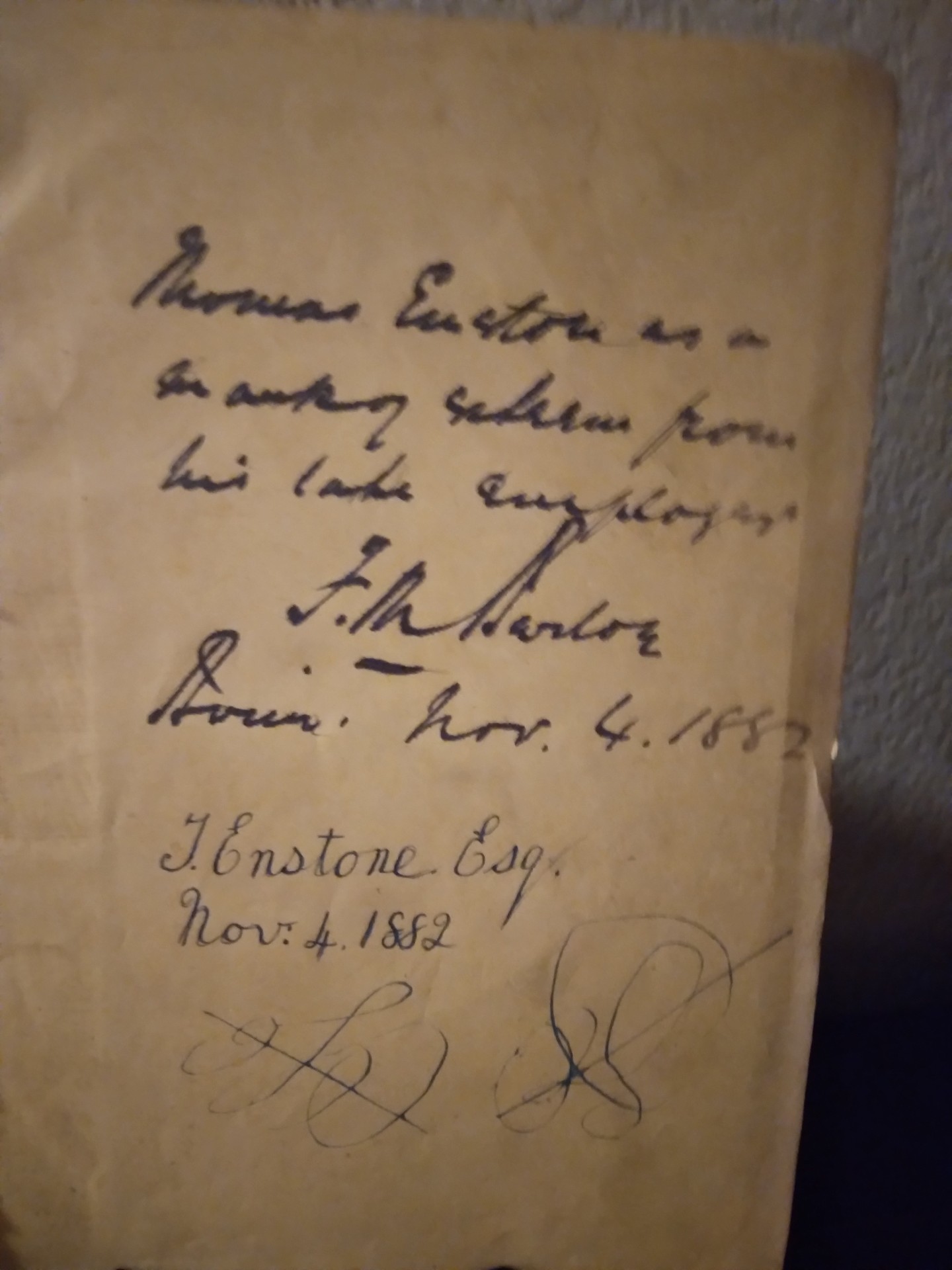
The book’s copyright date is 1882, inscribed by what looks to be F.M. Harlow to a late employee or employer, Thomas Enstone, that same year. The handwriting is difficult to read. Some poems are illustrated, such as “The Village Blacksmith.” Of course, the book sleuth in me was curious to know why a person might give this book to someone with whom they’d worked. What kind of business?

I’ve done some internet research at several points, trying to find out more about these individuals or a possible connection between them and the author. I found that Longfellow’s nephew worked with an architect named Alfred Harlow. In addition, there was a Louis Harlow, who illustrated some of Longfellow’s books. So, maybe the Harlows were related? That’s all I’ve come up with so far, but it’s fun to look! If you have any ideas, I’m interested!

Since that day, the door to the Little Free Library has come apart and been fixed several more times. But people continued to put books in there. I brought home several, although those were more contemporary. My apartment’s bookshelf space is limited, so I’ll either need to donate more of my books to the library’s little bookshop or give up literary rescues altogether!

Thankful for…my critique group!

Amid troubles far and wide, reaching for positives as a lead-in to the coming holiday season feels like a wise course of action. Beyond the importance of family, health, and meaningful work, I’m drawn to reflecting upon my writing critique group. Most of us met through a larger local organization where we occasionally share our works and also enjoy monthly presentations on writing craft. However, several of us longed for a smaller group where we would share our work more regularly. So, about a half-dozen years ago, our small critique group of six was born. Twice a month, we meet in a study room at the Frisco, TX, library. We made it through the pandemic online but were happy to resume meeting in person.

Critique groups come in all shapes and sizes; the group I belong to is no exception. Our members write fiction for adults and children, nonfiction, novels, novellas, short stories, blog posts, and newsletters. We are both traditionally and self-published. Our process is simple. About four days before each scheduled meeting, we email our writing pieces to all members. Those members then read and offer praise, observations, questions, and suggested edits, then return the marked documents to the authors.

At our meetings, we discuss all the feedback as a group. In addition, we also talk about other things: publishing options, querying, what we’re reading, our research, and sometimes our personal lives. I’m happy to say we’re supportive not only as writing peers but as friends. Thank you: Linda Baten Johnson, Carolyn Lis, Gary Thornberry, Jan Angelley Cobb, and Donna Anderson. And also a note of appreciation to Karen Hodges, our former member who moved away with family. My writing has grown with your help. I’m grateful for each of you!

If you crave a successful critique group, various sites offer informative articles to assist your efforts. The Jane Friedman website tells how to “Find the Right Critique Group or Partner for You.” And after you’ve found your group or partner, the Writers in the Storm blog suggests “How to be a Good Critique Group Partner.”

I’d love to know about your experience with a critique group or partner! What didn’t work, and what DOES work for you?

As the following photo reminds us, interesting writing topics can appear in the most unexpected places!

Take care, Becky

Sault Ste. Marie, Michigan

“The Rules of Magic” : Basic Human Truths


One of the reasons that I attend several book clubs is for motivation to try new genres and authors. Although I’ve read some books in the past that would be considered paranormal, I don’t know that I would have chosen to read The Rules of Magic by Alice Hoffman unless it had been a book club pick. It isn’t AT ALL what I expected.

This book is a prequel to Practical Magic, for which there is also a movie that I’ve never seen. Possibly it was the picture on the movie ad that made me expect The Rules of Magic would be light, autumnal entertainment. Not so; in fact, tears came to my eyes countless times in the reading. Yes, the blurb DOES mention “loss,” but I just didn’t anticipate the feelings this book would evoke.

Don’t get me wrong, there are many paranormal elements to the story, especially as the children…Franny, Jet, and Vincent break more and more of their mother’s rules aimed at protecting them from their history and connections to magic. No walks in the moonlight, no black clothing,  and no cats, just to name a few! Once their mother and father allow them to visit their aunt, however, things really start to devolve. Over time, they eventually break most of the rules they’ve been taught, including warnings against falling in love.

Before I get to those “basic human truths,” or BHTs (not to be confused with that suspect additive, BHT :) I want to mention that Ms. Hoffman’s use of setting…both place and time is excellent. The Northeastern U.S. with its change of seasons affords wonderful atmosphere, and I felt a comfortable familiarity with the times in which the children grow up and try their hands at being adults, the 1960’s and 1970’s. Now, for those nuggets of humanity that even the witches and wizards in this book experience:

winter scene from Pixabay.jpg no attrib. req.

“…forgetting her loss would be worse than the loss itself.”  (p. 231)

“…when you truly love someone and they love you in return, you ruin your lives together.” (p. 254)

“I just do the best I can to face what life brings. That’s the secret, you know. That’s the way you change your fate.” (p. 258)

“Life is a mystery, and it should be so, for the sorrow that accompanies being human and the choices one will have to make are a burden, too heavy for most to know before their time comes.” (p. 266)

“It is simply the way of the world to lose everything you have ever loved. In this, we are like everyone else.” (p. 297)

“Well, we can’t really know our parents, can we?…Even for those with the sight, parents are unfathomable creatures.” (p. 331)

“But rules were never the point. It was finding out who you were.” (p. 365)

“Know that the only remedy for love is to love more.” (p. 366)

***

The book closes with unexpected developments and a new set of rules, one of which I know from my own life: “Always leave out seed for the birds when the first snow falls.” I thoroughly enjoyed this story and look forward to reading others by Alice Hoffman!

Hoffman, Alice. The Rules of Magic: A Novel (The Practical Magic Series Book 1). Simon & Schuster. Kindle Edition.

To end this post, I’m including a link to a lovely song, “A Case of You,” by Joni Mitchell taken from the soundtrack of the movie, “Practical Magic,” which I plan to watch, someday very soon. 

If you’ve read this book or others by the author, please share some of your thoughts in the comments!


I’m a Guest at the Smorgasbord End of Summer Party…Join us!


Welcome to the first of the end of summer posts this weekend. There are three meals today, Brunch, Afternoon Tea and Dinner this evening… and tomorrow Sunday Lunch. I hope that you will be able to visit at least one during your day. […]

via Smorgasbord End of Summer Party – Brunch Meet Robert Goldstein, Victoria Zigler, John W. Howell, Becky Ross Michael, Jemima Pett, Marcia Meara, Luna Saint Claire and Anita Dawes — Smorgasbord – Variety is the spice of life

Talking with Kids about Climate Change

After reading this week that some of Earth’s “old” polar ice is breaking up for the first time on record and that the current administration plans to further relax the pollution rules, I felt frustration beginning to boil. What to do? Write about it! No, I’m not going to write a children’s book about climate change (at least not now:) but I AM going to tell you about several good literature choices that are available. These books can help you broach this topic with our young and up-coming scientists, activists, and caretakers of the Earth.


The Tantrum that Saved the World is by Megan Herbert (writer and illustrator) and Michael E. Mann (climate scientist). This rhyming book is available in hardcover and e-book from World Saving Books in Amsterdam. In the story, various people and animals who have been displaced by climate change come knocking. They don’t just want a place to stay, though; they want to get busy and make a change!

The story is easy to understand for young children, and the colorful illustrations add to the enjoyment. Toward the end of the book, you’ll find informational pages about the science of climate change that will add even more depth for somewhat older readers. The print book includes an action plan poster, and the e-book version offers a PDF of the poster, as well. Bill Nye the Science Guy recommends this book, which is certainly high praise.


The Magic School Bus and the Climate Challenge is just one of the adventures in this science series for kids written by Joanna Cole and illustrated by Bruce Degen. As a teacher, I loved sharing these stories of Ms. Frizzle and her class with my own enthusiastic students.

This particular book from the series explains in a kid-friendly way just why the Earth is getting warmer and explores what the children can do about the situation! The lively illustrations tell even more of the story beyond the text. Available in hardcover, paperback, and audio.

I’m wondering if any of you have read and discussed either of these books with your own children or students. If so, I would love to hear about the experience. In addition, please feel free to share any other titles on the topic of climate change geared toward young kids all the way up through YA! 

~Becky

Recipe Notebook from the Past

Laurium House
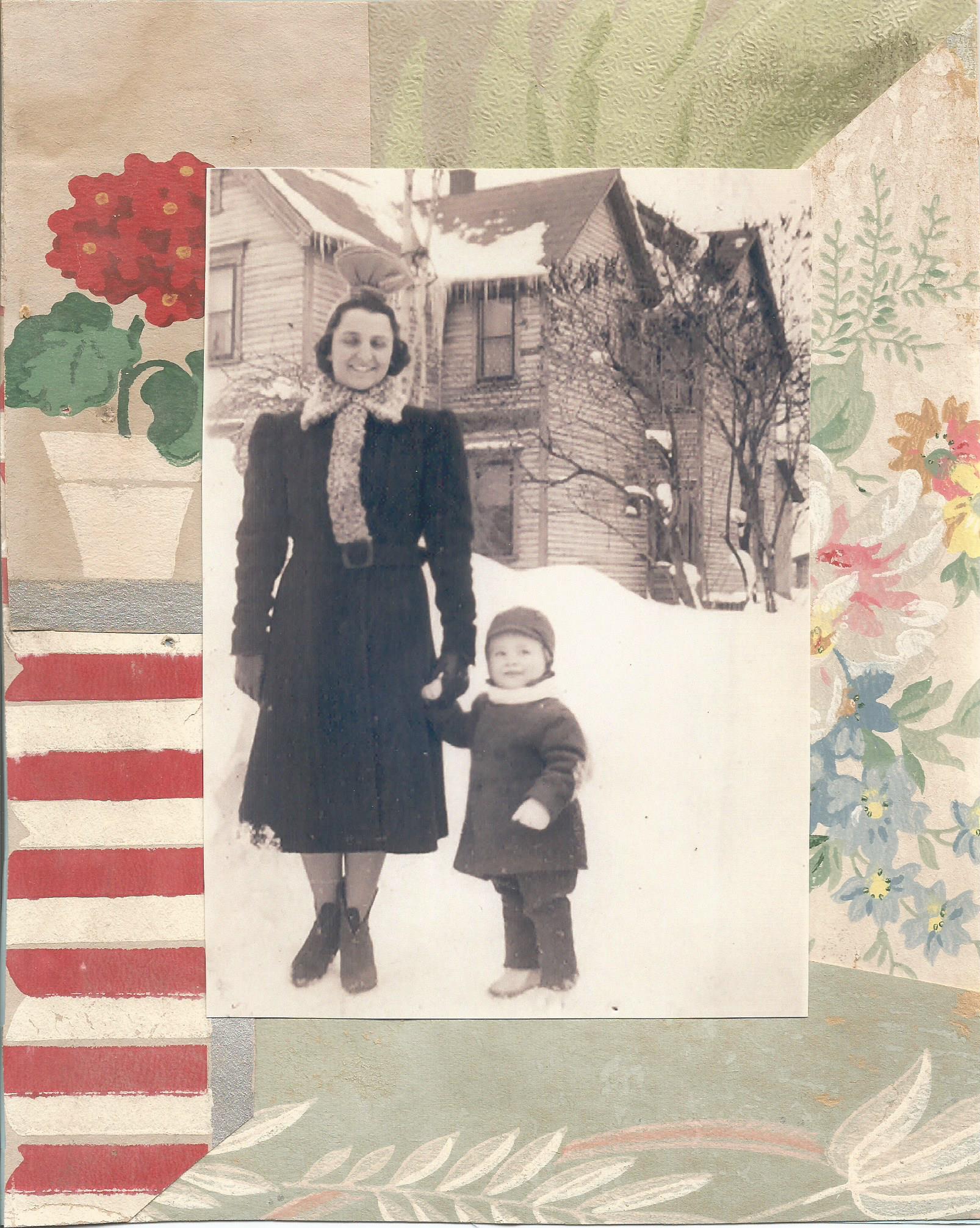
Vintage photo of unknown neighbors and what years later would become my home. The border is formed from wallpaper recovered within the kitchen walls!

Decades ago, my former husband and I bought a fixer-upper home that had been built around 1900 in a small town of Michigan’s Upper Peninsula. The house needed tons of work, and we basically lived upstairs while we began remodeling the first floor. When I say “we,” I mean mainly that he did the carpentry, and I cleaned up during and after the work was completed.

Since the kitchen was on the first floor and needed to be functional as soon as possible, that room was one of the priorities. While taking out the drawers in the kitchen for painting and new hardware, a small notebook was found jammed into the deep, dark depths of a cabinet. The booklet’s pages were somewhat discolored, and the brown, waxed cover bore the words “Memorandum Book.”

Within those lined pages, I discovered a delightful collection of handwritten recipes and helpful household hints. Some of them were even affixed with what must have been the names of the owner’s friends who had shared, as I recognized several of the last names of families living in that and the neighboring town. The penmanship style was similar to that of my mother or aunts who reliably sent letters to keep up on family news. I felt like I had struck gold.

Many of the recipes were desserts, although some were of casseroles or various types of vegetable and meat dishes. Two different versions of the Cornish meat pie regional specialty called the “pasty” were offered. Household hints ranged from a mixture that could be used to soften a hardened paintbrush to a home remedy for cough syrup.

When we said “goodbye” to that house some years later, the notebook found a new home in my paternal grandmother’s wooden recipe box and left with me.

I was recently encouraged to see that an online author acquaintance, Karen Musser Nortman, had put out a call for camping and/or Upper Peninsula recipes to accompany her current Frannie Shoemaker Campground Mystery, which is set in the area. I’m happy to say that the directions I submitted for pasties, “cry baby” cookies, and pasta sauce, all copied from that old notebook, now appear in the fiction book, Real Actors, Not People. What a fun way to recycle a few of those rescued recipes!

~Becky~

Inspired by a Dream

winter scene from Pixabay.jpg no attrib. req.It began as one of those dreams where the setting and events that were unfolding seemed simultaneously familiar yet unfamiliar. Instead of watching the vision like a movie, I was taking part and looking out through the woman’s own eyes toward three children gathered around a kitchen table. A snowy scene beyond the window was as well-known to me as the back of my hand.

The mood was both comforting and uncomfortable. I started to waken, but willed myself to remain in that place. Every inch of the room was recognizable to me, as were some of the occupants. As I held onto the dream, I knew without a word being uttered what had happened to these people and what their futures held.

Next, I just needed to wake up and write the story!

Several years after that writing, the resulting short fiction, “Slip of the Lip,” now appears in the 2018 edition of the UPPAA’s anthology, the U.P. Reader. That publication is an intriguing mix of fiction, non-fiction, prose, poetry, and photography, with its roots planted firmly in Michigan’s Upper Peninsula. I’m proud to have my writing once again included, along with so many talented contributors.

UP Reader 2nd Edition